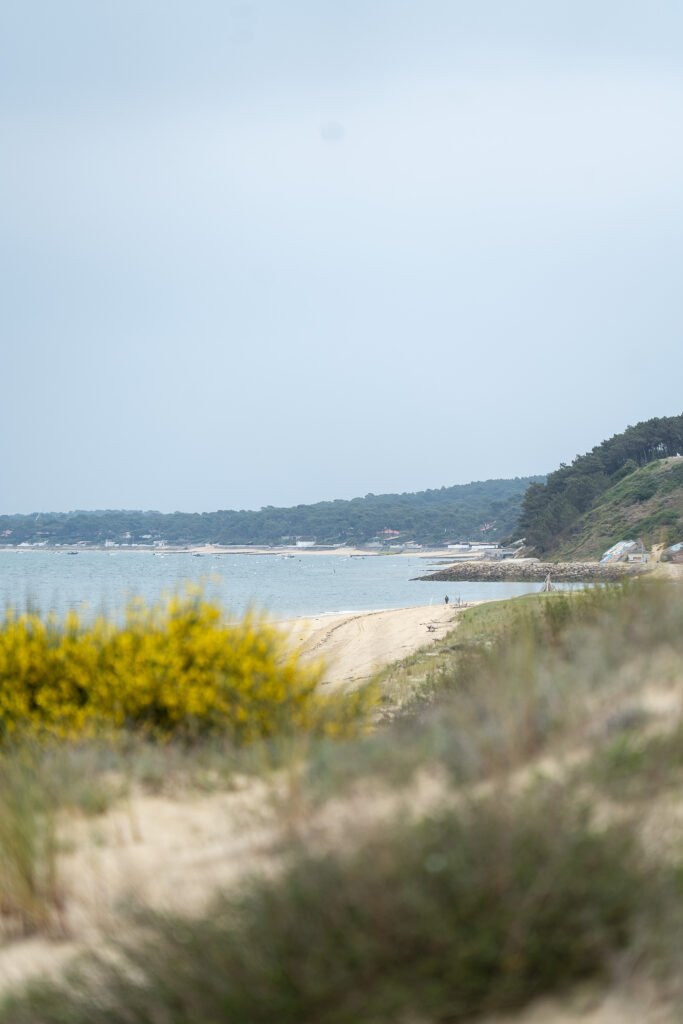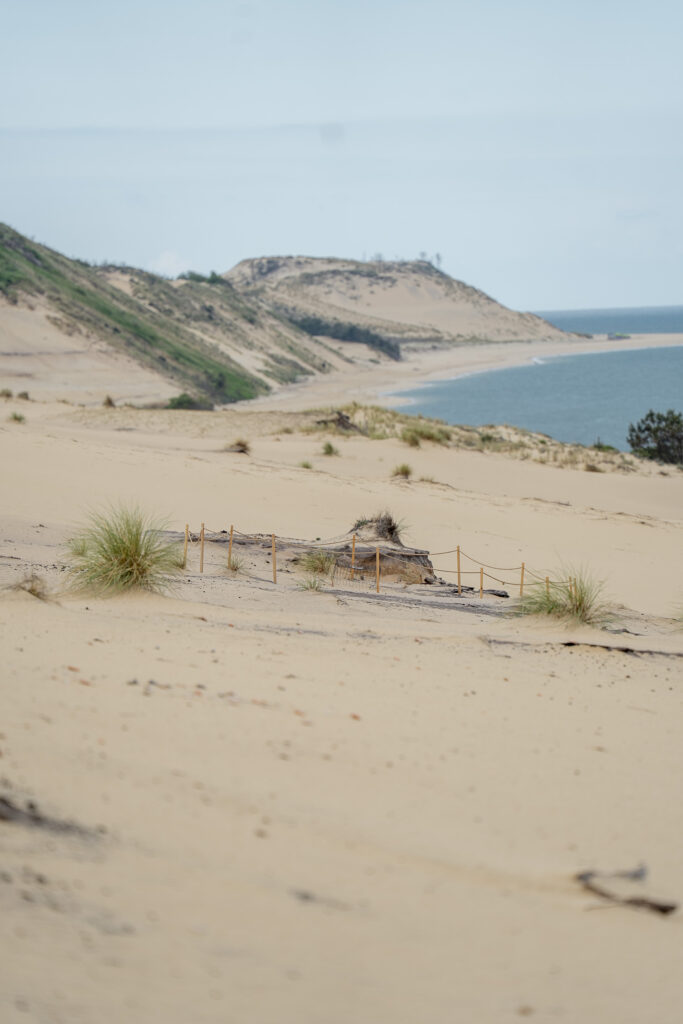


EBetween the end of March and mid-July, the upper beach of the Dune du Pilat becomes a veritable nursery for the Kentish plover, a small protected bird which lays its eggs directly on the sand, right on the beach, where they are particularly vulnerable. During these few months, the agents of the Syndicat Mixte de la Dune carry out, once a week, surveys on the beach side, up to Petit Nice, in order to locate any nests and protect them.
A discreet but endangered bird
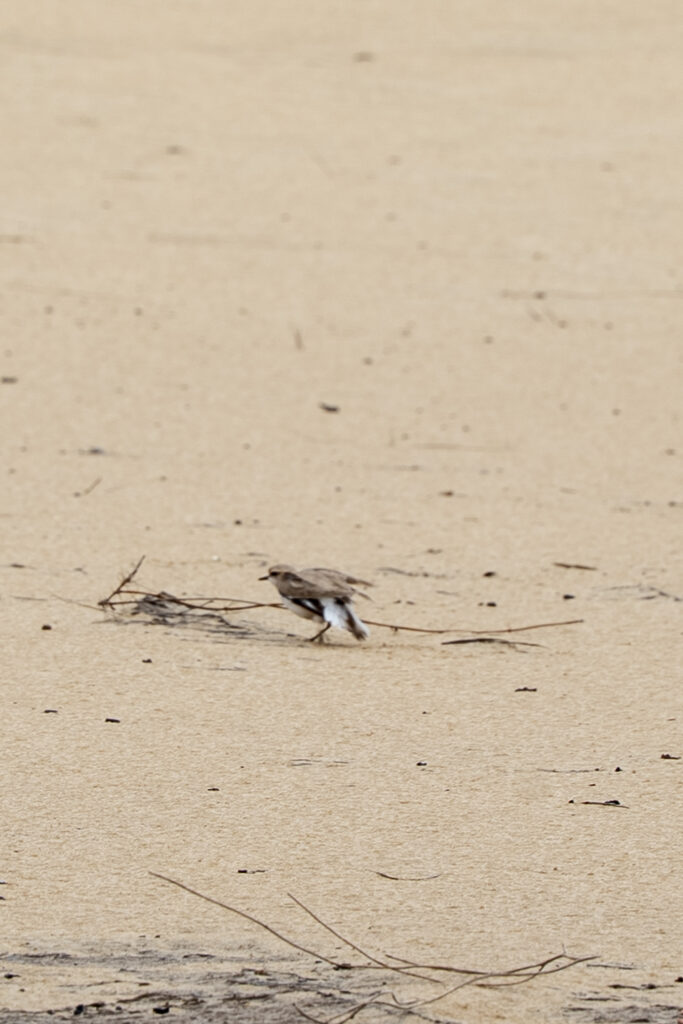
The Kentish plover is a small shorebird, about fifteen centimeters long, which blends easily with pebbles and shell fragments thanks to its sandy plumage. This species, protected in France and Europe, nests directly on the upper beach, making its nests very vulnerable to disturbance, trampling, and predators.
The breeding season
At the Dune du Pilat, the breeding season generally extends from the end of March to mid-July, with eggs laid directly on the sand, often hidden in the wrack line. The perfectly camouflaged eggs are incubated for several weeks before hatching, after which the chicks remain on the ground and depend heavily on the tranquility of the area to survive.
Weekly monitoring of the nests
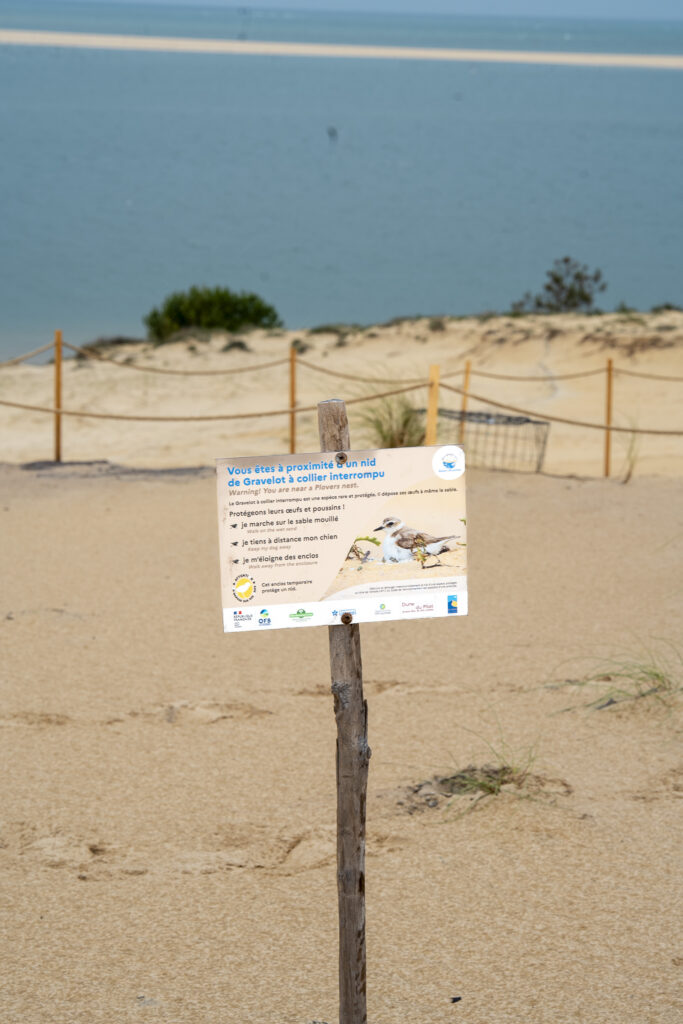
Throughout the season, agents from the Syndicat Mixte de la Dune patrol the beach area weekly to locate any plover nests. Once detected, these nests are protected (marking, signage, awareness campaigns) to minimize disturbance and give the broods the best chance of survival.
The video nest: a success
The nest shown in the video was identified quite early during these surveys, allowing researchers to follow its entire life cycle, from egg-laying to hatching. Thanks to the fieldwork of the teams and the adherence to guidelines by beachgoers, the eggs were preserved for several weeks until the chicks hatched—a great victory for this fragile species.
The right actions to adopt
To continue protecting the ringed plover, it is essential to stay on the lower beach, respect marked areas, and avoid approaching protective enclosures or birds that appear injured and are calling, as this is a sign of a diversionary behavior near a nest. Keeping dogs on a leash and maintaining a safe distance from the seabed are simple actions that directly contribute to the breeding success of this threatened species on the Gironde coastline.